Wednesday, May 21, 2008

What Followers Want


OVER the past 30 years, there has been increasing data to suggest that leadership has a lot more to do with inspiration and vision, rather than straightforward technical competence.

Leadership is now recognised as a transferable skill that can be developed by continued learning and development.

By contrast, the Great Man theories of leadership and cults of personality are now seen as largely irrelevant.

Research carried out by the Department of Trade and Industry in the United Kingdom confirms that today's workforce is more diverse, informed and sophisticated than ever before.

Ultimately, people are still looking for something different and better in organisational leadership.

Managers demand inspirational and visionary leaders who win not only results, but also the trust and respect of their teams.

Followers will respond to leaders who tell them that what they do is important and that it makes a difference.

There exists, unfortunately, an inspirational gap.

Research suggests that over half of managers are working for organisations which have apparently not yet fully evolved to meet the needs of today's high performing workplaces.

Too many experience excessive bureaucracy and command and control behaviours, which have a tendency to inhibit, rather than improve, individual and organisational performance.

Inspiring others

For Singapore to maintain its competitiveness, there is a growing need for companies to adopt strategies that will enable a greater level of innovation and deliver higher value goods and services.
Significant changes in what is required of good leaders have been observed over recent years.
High-performance, innovative organisations require "inspirational leadership" more than ever before if they are to survive and prosper in a world where the only certainty is uncertainty.

Inspirational leadership requires six essential elements. Such leaders:
* Genuinely care about their people,
* Involve everybody,
* Show lots of appreciation,
* Ensure work is fun,
* Show real trust, and
* Listen a lot.

To discover how these elements can be better realised in practice, a comprehensive research project was designed to look in more detail at the qualities of inspirational leaders.

A series of in-depth qualitative interviews with leaders who had been selected by peers for achieving exceptional results revealed common themes in terms of their most prevalent leadership characteristics.

They identified their own strengths as:
* Strong communication - storytelling and listening,
* Passion for learning and intense curiosity,
* Focus on developing people,
* Having fun and very energised,
* Strong self-belief, coupled with humanity and humility,
* Committed to giving something back and to making a significant difference,
* Clarity of vision and ability to share it with their people,
* Dogged determination, often "relentless",
* Very strong focus on priorities,
* Not afraid to show some vulnerability,
* Regular use of reflective periods,
* Almost universal dislike of jargon, and
* Passion for and pride in what they do.

Desirable traits

Not surprisingly, many of the leadership qualities desired by the followers surveyed also reflected the views of both exceptional leaders and the findings from best practice case studies.

They valued leaders who showed:
* Genuine shared vision,
* Real confidence and trust in their teams,
* Respect for employees and customers,
* Commitment to developing people,
* Clear standards of ethics and integrity, and
* Willingness to take risks.

Managers confirmed that individuals and teams who were inspired and enthused would operate at a different level from the competition.

Around one-third of followers admitted that they had never worked for, or been motivated by, an exceptional leader in their lives.

Over 60 per cent of followers reported that their leaders were out of touch with how people were feeling. This remoteness and distance had a negative impact on morale and motivation levels.

Giving people space and responsibility, and recognising and believing in their abilities, remain the most effective and powerful ways to motivate followers.
Participative, rather than command and control cultures, tend to encourage these behaviours.

This finding is probably linked with another: that followers do not, on the whole, see their leaders creating a feeling of energy, fun and excitement in the organisation.

About 93 per cent identified this as a key leadership attribute, yet only 32 per cent experienced it.

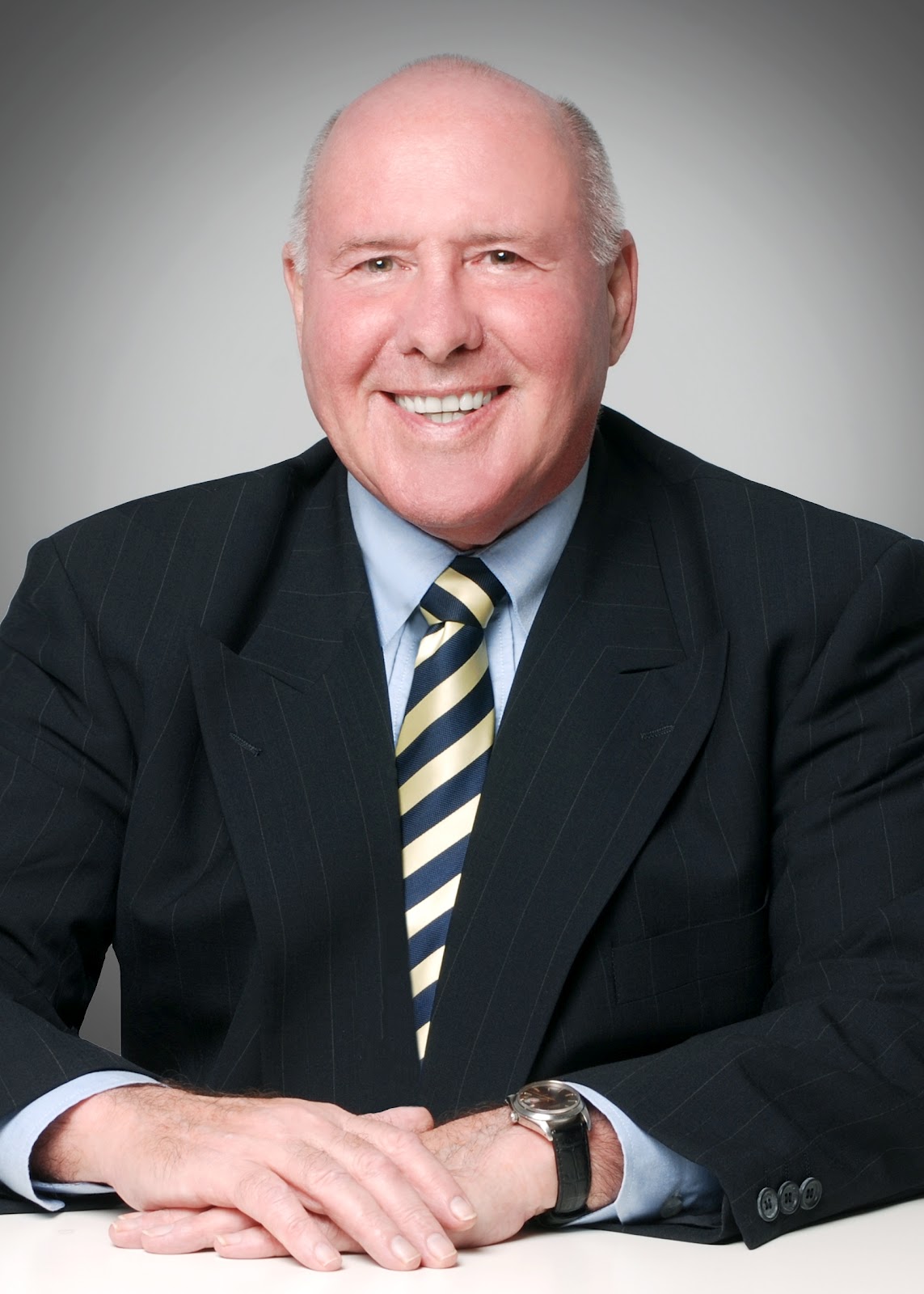
Article by Chris Fenney, director of  Training Edge International. He has more than 30 years' experience in training and management development gained in commercial organisations in Europe and the US.

Email  : chris.fenney@trainingedgeasia.com  
Website: www.trainingedgeasia.com


For more information on our training programmes , please  contact us at 63365804.
 

Wednesday, April 9, 2008

Get Fresh


SIMPLY put, creativity is about coming out with something new. Being creative may not make you another Michelangelo, but new ideas are certainly necessary for today's fast changing world.

As Edward de Bono, the world's foremost authority on lateral thinking and innovation, said: "It is no longer enough to be efficient and solve problems. Businesses need creativityto make the shift from administration to true entrepreneurship."

You can also use creativity in your daily life. You can look at what you are doing and find alternative ways to improve. Problems become opportunities for you to use your creative thinking.
Critical versus creative

Our brain's left hemisphere is all about logical, rational and sequential thinking while the right brain hemisphere is concerned with intuitive, random and subjective thinking.

Schools tend to concentrate on boosting the left brain in "scholastic" subjects and right-brain activities such as creativity and aesthetics tend to be downplayed. As a result, many people end up being more critical than creative.

Stimulating the right brain can be done by attempting tasks that require imagination and a fresh approach. The human brain has the ability to create an infinite amount of ideas. Unfortunately, most people use only 2 to 3 per cent of their brain capacity.

As a technique for generating ideas, take a look at a classical method called Scamper, an acronym for a collection of seven techniques. There are success stories for each of these techniques:

Substitute: The Russians failed to market vodka in the United States in the 1930s because clear alcohol was not popular. Heublein bought the rights, and looked for other ingredients (substitute) to colour the drink. Moscow Mule, Screwdriver and Bloody Mary were born and caused vodka sales to rise from 6,000 cases a year to 38 million in 1988.

Combine: Customers of American gas company Arco asked if they could walk over to the adjacent convenience store to pick up a hamburger and a quart of milk after they had pumped their gas. As a result, customers can now do all three (combine) all at the same petrol kiosk.

Adapt: William Durant, the founder of General Motors, had great ideas but could not run the company profitably. He was replaced by Alfred Sloan, who was able to take many of Durant's ideas and turn them (adapt) into reality.

Modify: 3M's advertisements to sell Post-It pads did not cause sales to pick up. Its general sales manager, Joe Ramey, noticed that people who used the pads could not stop. He convinced the company to modify its marketing approach by giving away free samples. Since then, the Post-It has become one of 3M's all-time champion products.

Put to other uses: A toilet tissue manufacturer discovered a carload of paper that was too thick to be made into tissue. Unable to return it, he asked himself what else could be done with the paper?" (put to other use), and paper towels were born.

Eliminate: Before 1836, mail charges were paid by the addressee, with the fees computed according to distance and weight. This made correspondence expensive and slow. Rowland Hill proposed that postage be uniform regardless of distance (eliminate), and that this fee be prepaid by buying and affixing a stamp.

Rearrange: Xerox's first copier was priced at $4,000 and few companies were willing to make such a capital investment. Xerox understood this and began selling what they produced: copies. At 5 cents a copy, company staff could pay for the documents from petty cash (rearrange).

Taking up a hobby is a good start to being creative, and magic is one hobby that requires a lot of creative input. Since magic tricks rely on illusions, it takes a lot of creative effort to make something that is not real appear believable.

You will find that the process of conceiving a magical idea and communicating it to the audience through a performance is a creative process.


Contributed by John Teo, a senior consultant with Training Edge International, who has more than 25 years of experience in senior management and more than a decade of training, management development and facilitation experience. He is also the President of International Brotherhood of Magicians (Singapore Chapter) and he frequently uses magic in his workshops presentations to bring out important learning principles in a fun way. 


For more information on our training programmes , please  contact us at 63365804.


Tuesday, April 8, 2008

You Are The Boss, You Decide


The battle to remain employed has been lost - the new battle is to remain employable.

Welcome to the brave new world of the 21st century. All around us, the old certainties are fast disappearing to be replaced by the new, the unknown and the uncertain. Consider some of the paradoxes. The economy is changing. The iron rice bowl is no more. Jobs for life have gone. Unskilled, low value-added jobs are fast-disappearing. Full-time jobs are being replaced by contract or part-time work.

We are rapidly transforming into a knowledge-based economy driven by information technology, research and development and the provision of advanced services. Organisations are changing. They are flatter, leaner and more flexible, having to respond to the changing environment, customers and clients faster. Fewer people are being employed; and they have to work harder, faster, smarter and be multi-skilled and creative with a new, more open mindset. The market is changing. Consumers are older and wiser, demanding sophisticated value-added products and services. If you cannot deliver a better product or service at a cheaper price in a fast-changing market place, your competitor will!

Aim to be employable

There is no such thing as a career path any more. It is crazy paving, and you lay it yourself. The old employment paradigm has shifted forever. In the past, organisations were paternalistic, offered job security, had defined career paths, practised succession planning and had focused job descriptions and titles with narrow and specific responsibilities and clear reporting lines. The new organisational reality is very different. The company is no longer responsible for your job security. No employer anywhere, in any organisation, can guarantee you a job. The old psychological employment contract has been replaced by a looser, less structured working relationship. The emphasis is on employability, not employment.

Careers must be self-directed and highly flexible. You have to take more responsibility for your own development by building a portfolio of skills and talents, being capable of switching roles rapidly and multitasking with ease. Career resilience is the new mantra of our times. Be responsible for yourself, adopting a "self-employed" mentality even if you are working for a large organisation. Knowledge is the new currency of business, and lifelong learning is no longer an option, it has become mandatory for survival.

Invest in yourself

As an employee, you must know the skills you have and how these skills can be marketed to other employers. Continually update and upgrade your skills and be aware of new roles you may be required to fill. Develop skills aligned to business needs, an attitude that is focused yet flexible and a dedication to continuous learning and personal excellence. Deliver a solid performance in support of your organisation's goals. It is vital that you discover, or rediscover, yourself through self-awareness. Understand your personality and work style, what drives you and what your preferences are in a work situation.

Invest in yourself through developing an understanding of your work behaviour. Complete a proven personality-profiling tool such as Disc or Myers-Briggs and reflect on the feedback. Be aware of the key characteristics of employability and what employers value in the people they hire and promote.

There is a new emphasis on effective communication and interpersonal skills, with a growing awareness of the need for EQ (emotional quotient) as well as IQ. Good teamwork is required from people with positive and flexible attitudes.

There is a growing demand for problem-solving, creative and innovative thinking skills, with an increased willingness to take risks. Continuous learning is a necessity together with a commitment to personal excellence. And if you are developing a managerial career, do be aware of the new managerial realities. You need to become a coach - to nurture and develop the skills and abilities of your staff. Learn to delegate and empower, manage transition and change, and develop managerial leadership based on influence, not power.

Article by Chris Fenney, Co-Founder and Director of Training Edge International, who has more than 30 years' experience in training and management development across a range of sectors including manufacturing, service, retail and leisure.


For more information on our training programmes , please  contact us at 63365804.